
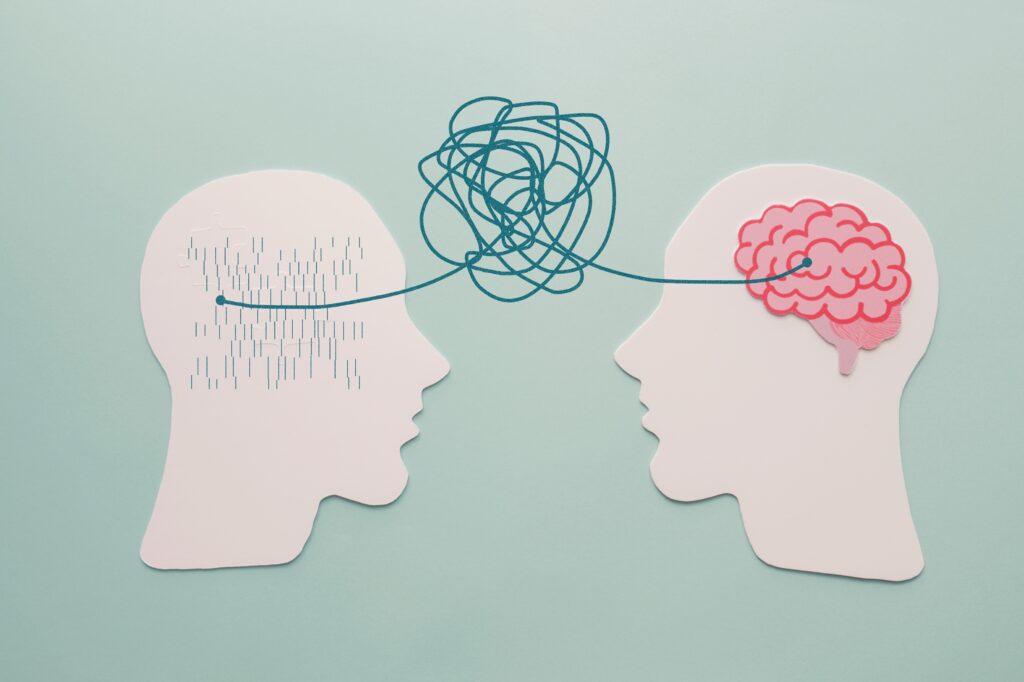
Mental Health Isn’t Someone Else’s Story: Lessons from Living It
Mental health is often treated as a condition, something you either have, or you don’t. It’s also discussed in the context of things that happen to “other people”. After years of professional experience and deeply personal moments, I’ve come to a different conclusion: mental health is a continuum, and every one of us exists in it.
I didn’t arrive at this perspective all at once. It developed over time, through my work with survivors of domestic violence and sexual assault, with refugees rebuilding their lives, and with individuals experiencing acute mental health crises. This understanding deepened in ways I wasn’t prepared for when it reached closer to home, affecting the people I love.
I found myself supporting a son after a suicide attempt, helping a daughter navigate anxiety, and now caring for a mother with dementia. At the same time, I’m paying close attention to a granddaughter who may be showing early signs of ADHD.
What became clear, rather quickly, is that mental health does not fit into neat categories. Just as importantly, neither should our conversations about it.

The Silence Around Mental Health
In so many situations I’ve encountered, there is one thing that is almost always part of the equation: silence.
Survivors of violence often carry their experiences quietly, weighed down by shame or fear of not being believed. Refugees may come from cultures where mental health is rarely discussed or undefined. And many of us know or can identify with individuals who are struggling internally but skilled at appearing “just fine”.
Too often families, even those who care deeply for one another, find conversations about mental health difficult to start and easy to avoid.
But silence doesn’t just reflect stigma; it reinforces it.
When we don’t talk about mental health, it remains abstract, something distant, something that happens to someone else. And that distance makes it harder to recognize when someone, perhaps someone we love, is silently struggling.
What Changes When It Becomes Personal
When my son attempted suicide, there were no perfect words, only necessary ones. Rather than hide it, we chose to include this experience in our Christmas letter to family and friends that year, so others might have the courage to talk about hard things, too.
Supporting a daughter with anxiety requires ongoing dialogue, learning how to listen without immediately trying to fix it, and how to create space without creating distance.
Caring for a parent with dementia has brought a different kind of conversation—one shaped by loss, patience, and the gradual realization that you are navigating something others may not recognize or fully understand if you don’t name it out loud.
Because of these experiences, I am reminded that how we talk about mental health early on matters. As we engage appropriate resources to help my granddaughter, it’s clear that the language we use and the openness we model shape how the next generation understands themselves and how willing they are to speak up when it matters most.

Why Conversation Matters
Talking about mental health does more than raise awareness, it changes outcomes.
It makes it easier for someone to ask for help before they reach a breaking point. It allows families to respond with understanding instead of confusion. It helps communities recognize patterns that might otherwise go unnoticed. And it begins to chip away at stigma—not in large, abstract ways, but through small, consistent actions.
A conversation doesn’t solve everything. But without it, very little changes.
Reframing Mental Health as a Continuum
Part of the challenge is reexamining how we think about mental health in the first place. We often frame it as an “either/or” distinction: you’re OK, or you’re not; you’re coping, or you’re in crisis. But that’s not how people experience it.
Mental health moves along a continuum:
Stress → Distress → Crisis → Recovery → Resilience
We all move along this continuum at different times. Recognizing this makes it easier to talk about because it becomes less about labels and more about shared experience. We may even find ourselves at different points on this continuum for different challenges at the same time.
When mental health is normalized as something we all navigate, the conversation becomes less intimidating to start.
From Conversation to Advocacy
Talking about mental health is not the end goal, it is the starting point. When people begin to speak openly about their experiences, patterns become visible, gaps in support become clearer, and the limitations of existing systems are harder to ignore.
From my own experience, I have seen how difficult it can be to access care and support when it’s needed most. But meaningful change happens when enough people are willing to say, “This isn’t working, and it needs to be better.”
Conversations can create momentum, turning individual experiences into community awareness, and community awareness into advocacy.

Where We Start
We don’t need perfect language to start talking about mental health. We don’t need complete understanding, a college degree, or years of professional experience.
We need willingness.
Willingness to ask a question and stay for the answer. Willingness to share, even when it feels uncomfortable. Willingness to listen without judgement or the urge to immediately solve.
These are small actions, but they are how change begins.
Where Change Begins
The most important lesson I’ve learned is that mental health does not separate us, it is part of us.
Talking about mental health has shaped my life, and I have witnessed a son who is now a trusted, go-to person for peers navigating their own struggles. I have grown closer to my daughter and found approaches that help reduce stress for her and me. I have come to appreciate the hidden blessing of living in the moment with a parent who cannot remember the past or worry about the future. And I am committed to creating a better world for my granddaughter and her generation by encouraging early intervention and support, and modeling advocacy for those who might “fall through the cracks”.
The more we are willing to talk about mental health—honestly, consistently, and without stigma—the more possible it becomes to support one another and to push for the changes we know are needed, because silence maintains the status quo, but conversation is where change begins.
About the Author:
Sarah Halstead is the Manager of Community and Faith Partnerships at Lutheran Social Services. Her professional career spans over 25 years and includes teaching and directing programs for families and children, survivors of domestic violence and sexual assault, refugees, elderly and faith communities. A self-proclaimed Laughter Lover, Lifelong Learner and Abundance Attractor, she speaks to audiences regularly weaving professional and personal experiences into memorable encounters that make people think. She lives in Central Wisconsin with her daughter and granddaughter and near to her elderly mother. To balance her life’s demands, she enjoys fiber arts, gardening and time with her pets.