
“Healing Belongs to You, Too”: Understanding Minority Mental Health Awareness Month
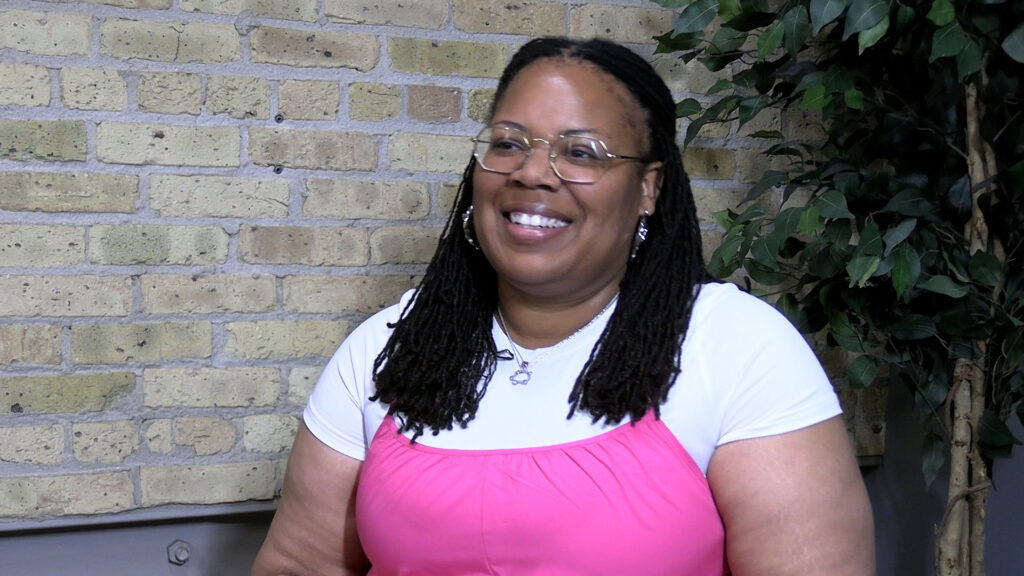
Every July, Minority Mental Health Awareness Month invites us to look more closely, not just at mental health in the abstract, but at who has access to care, whose realities are being reflected, and what healing looks like across communities with different histories, cultures, and challenges. To mark the occasion, we sat down with Erionia Dixon, LSS School Centered Mental Health (SCMH) Program Supervisor and Therapist, to explore why this month matters and what it means to truly support mental wellness in minority communities.
Why a Separate Month?
Mental Health Awareness Month is observed every May, and Recovery Month comes in September. So why does July need its own dedicated focus?
“Because awareness alone doesn’t automatically create visibility or access,” Dixon says. “Minority communities often experience additional layers that shape mental health—including intergenerational trauma, immigration experiences, economic barriers, language access, and cultural expectations.”
Minority Mental Health Awareness Month was established in honor of author and advocate Bebe Moore Campbell, whose work spotlighted the urgent need for culturally responsive care in communities that have been underserved. The month creates what Dixon calls “intentional space”—room to move beyond the broad message that mental health matters toward asking whose mental health experiences are being recognized, and how.
When we talk about minority communities in this context, the scope is intentionally broad. It includes people and communities whose lived experiences, identities, histories, languages, and cultural contexts shape how they access care, seek support, and define wellness. Dixon is quick to note that no community is a monolith. Culture shapes how people understand emotions, seek help, heal, and define what it means to be well.
The Barriers Behind the Barriers
Stigma gets most of the attention in mainstream mental health conversations, but Dixon points out it’s only part of the story.
“Many people are willing to seek help and still cannot access it,” she says. Structural barriers often include cost, insurance limitations, transportation, long waitlists, inflexible work schedules, and a shortage of culturally responsive clinicians. For some communities, there is also a deep mistrust rooted in experiences of not being believed, understood, or treated fairly within healthcare systems.
Insurance alone can create enormous obstacles. People may connect with a therapist who truly understands them, only to discover they’re out-of-network or face restrictions on how often they can be seen. “For many families. Therapy becomes a financial decision instead of a health decision,” Dixon explains. When housing, food, transportation, and caregiving are already competing priorities, mental health care can feel out of reach even when the need is clear.
Language access adds another dimension, particularly for immigrant communities. Dixon is emphatic on this point: “Language influences more than communication. It influences trust, emotional expressions, understanding of symptoms, and how people make meaning of experiences.” When someone cannot fully express themselves in the language being used during therapy, important details are missed—and some emotional experiences or cultural concepts simply don’t translate directly. “Language access should not be viewed as an accommodation,” she says. “It should be considered part of quality care.”
For those facing multiple barriers at once, Dixon’s advice is grounding: “Start with one step, not the whole staircase.” That might mean calling an insurance company to ask about behavioral health options, looking into community mental health centers, exploring employee assistance programs, or reaching out to a trusted community organization. “The goal is not perfect access overnight. The goal is creating one opening and allowing that opening to lead to the next.”
The Silence Within the Culture
Some of the most powerful, and complex, barriers to mental health care don’t come from systems at all. They come from within communities themselves, often wrapped in messages that were originally meant to protect.
“In many communities, phrases like ‘pray about it,’ ‘keep pushing,’ ‘don’t tell people your business,’ or ‘we survived worse’ can reflect strength and survival, but they can also unintentionally communicate that struggle should stay private,” Dixon observes. She’s careful not to frame this as a failure. “For many minority communities, silence was not created out of weakness. It was created out of necessity.”
The “Strong Black Woman” archetype, the “Self-Sacrificing Immigrant Parent”, the family expectation that struggle stays in the house—Dixon sees these narratives as teaching people that worth is measured by endurance. “When strength becomes identity instead of capacity, people may feel guilty for needing help.”
Religion and spirituality add another layer of nuance. Faith traditions have provided identity, meaning, community, and emotional care for generations—often before mental health language even existed. Dixon honors this fully, while also naming where tension can arise: “Challenges occur when spiritual practices are framed as replacements for all forms of mental health treatment instead of companions to them. Prayer and therapy are not opposites. Many people find healing in both.”
To someone whose family is pushing back on their decision to seek therapy, Dixon’s message is direct and warm: “Your desire for support does not mean you are rejecting your family, your culture, or your values. Sometimes choosing therapy means adding tools, not replacing traditions. And seeking support does not require permission to be valid.”

Finding Care That Fits
When someone is ready to find a therapist, Dixon emphasizes that cultural competence is about more than shared background.
“Good therapy should not require someone to translate their humanity before they can begin healing,” she says. A culturally competent provider recognizes that mental health doesn’t exist separately from culture, identity, environment, family history, and lived experience. In practice, that means a therapist who is curious rather than assumptive, aware of their own biases, and willing to understand how race, language, religion, immigration status, or community values shape someone’s life.
Does that therapist need to share your racial or ethnic background? Not necessarily, Dixon says—though representation matters to many people and can reduce the emotional labor of explanation. What matters more is cultural humility, openness to feedback, comfort discussing identity, and the ability to make a client feel seen rather than studied.
For individuals who cannot afford therapy at all, Dixon is clear: “Affordable does not automatically mean ineffective.” Community mental health clinics, federally funded health centers, employee assistance programs, graduate training clinics, peer support spaces, nonprofit counseling organizations, and faith-based counseling resources all exist along what she calls “a broader wellness ecosystem.” Beginning with a support group, workshop, or community healing space can sometimes create enough stability to take the next step.
Community as Medicine
Perhaps the most resonant theme in Dixon’s perspective is the idea that healing has always been happening in minority communities—it just hasn’t always involved professional mental health care.
“Healing looks like aunties checking in. Friends sharing meals. Church mothers remembering birthdays. Community groups organizing resources. Neighbors helping with childcare. Group chats that became lifelines,” she says. Historically Black churches, and mutual aid networks have long provided belonging, emotional support, mentorship, storytelling opportunities, and collective hope. Often filling gaps that formal systems have left wide open.
Peer support and storytelling, she argues, are genuinely therapeutic. “There is something powerful about hearing ‘Same here’ from someone who understands. Stories reduce shame. They organize experience. They remind people that they are not broken or alone.” At the same time, she’s careful to hold both truths: sometimes community is enough, sometimes clinical support is also needed. The goal is support that matches the moment.
Healing rarely looks like forgetting past trauma and harm. “More often, healing looks like remembering differently,” Dixon says. “It looks like naming experiences that were once silenced. Building traditions that restore rather than deplete. Giving younger generations permission to experience life differently.” And healing is rarely only individual. “One person entering therapy can shift an entire family. One honest conversation can interrupt years of silence.”
A Call to Action
As minority Mental Health Awareness Month draws attention to these realities, Dixon’s ask is simple and specific.
“I want people to do one thing: choose one act of care and make it real this week.” Schedule an appointment. Send the text. Start the journal. Take the walk. Join the support group. Rest. Begin.
And for the people supporting someone else: “Healing does not require having the right words. Sometimes showing up consistently matters more than saying the perfect thing.”
Her core message for the month is one she returns to throughout: “You do not have to earn support. You do not have to wait until things get worse. You do not have to do this alone. Healing belongs to you, too.”
Erionia Dixon is the Milwaukee SCMH Program Supervisor and Therapist with Lutheran Social Services of WI and Upper MI (LSS). For more than 140 years, LSS has helped individuals and families address needs around substance use and mental health, housing and homelessness, adoption, foster care, and refugee resettlement. As Servant-Leaders, LSS works to reduce barriers and improve access to resources at our centers and in homes, schools, and neighborhoods.