

LSS Refugee Program Stays Steady Amid Shifting Federal Guidance
When Omar Mohamed stepped into his role as LSS Refugee Program Manager in May 2023, the program was thriving. “We were booming,” he said. “We had full staff. Arrivals were coming. We welcomed more than 300 people that year.”
Funding was stable. Staffing was strong. And the work of welcoming refugees and supporting them through their first years in the United States followed a familiar rhythm.
Unfortunately, that rhythm wouldn’t last.
By late 2024, as federal resettlement processes signaled upcoming changes, uncertainty began creeping into daily operations. At the start of 2025, significant updates to national refugee‑resettlement policies went into effect. A stop‑work order paused federal funding, and arrivals slowed almost overnight.
What followed was one of the most turbulent years the program had experienced.
In the final months of 2024, refugee arrivals surged as federal partners worked to finalize cases ahead of shifting guidelines. “We had close to 390 arrivals in 2024,” Mohamed said. “From October through December alone, we had more than 160 arrivals. That’s historic for us.”
Soon after, a series of national policy adjustments reshaped how resettlement programs operated.
“Since then, we didn’t see new arrivals for almost a year,” Mohamed said. “Funding stopped. We had to cut staff.”
At its height, the refugee program employed 22 full‑time staff members. Within months, that number dropped to seven.
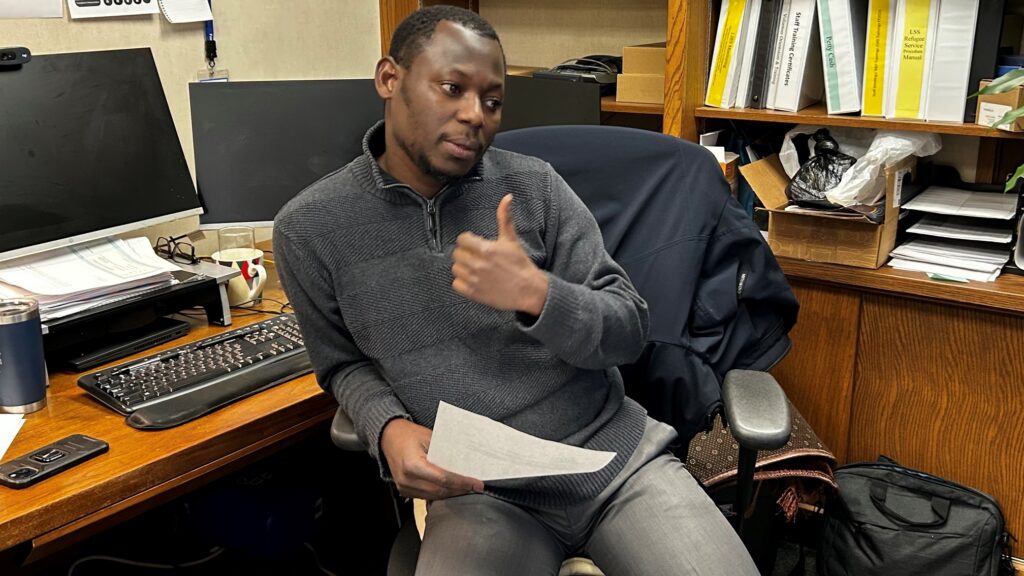
Kevin Fech, LSS Director of Program Services – Community Based, had just assumed oversight of refugee services when the stop‑work order arrived. “I thought I’d have a year to learn the program,” he said. “Then major federal updates happened, and everything changed.”
The most difficult decisions came quickly. “We had to ensure the long‑term viability of the program,” Fech said. “That meant right‑sizing. And unfortunately, that meant letting people go.”
For Mohamed, those conversations were deeply personal. “I had to sit across from people I worked closely with,” he said. “They weren’t crying because they were losing their jobs. They were crying because they were leaving the clients they were serving.”
Several staff members transitioned into other LSS programs, including Connections, allowing them to remain employed while continuing to serve immigrant and refugee communities.
“They brought language skills, cultural understanding and lived experience,” Fech said. “That’s been invaluable.”
To outsiders, refugee resettlement can appear static. Internally, it’s anything but. “Guidance would change Monday to Tuesday to Wednesday,” Fech said. “By the time you typed an update for staff, it was obsolete.”
Clients often heard rumors before official updates were released. “They’d come in worried, ‘What’s going to happen now?’” Mohamed said. “But we didn’t have concrete information yet. During periods of federal transition, updates often take time to reach local programs.”
That uncertainty required calm, restraint and constant communication. “We had to sift through the noise,” Mohamed said. “Read the policy. Understand what’s real. Then help clients digest it without panic.”
Even when arrivals paused, the work did not. “There are still thousands of people we serve within that five‑year window,” Fech said. “Housing issues. Immigration paperwork. Utility shutoffs. Emergencies don’t pause just because arrivals do.”
The stop‑work order also forced major operational changes. “We had to close federally funded cases and move clients into state‑funded programs,” Mohamed said. “That meant individual meetings, paperwork and case transfers, all while reassigning staff.”
Further complicating matters, in late 2025, refugee processing shifted from the U.S. Department of State to the Department of Health and Human Services. “That’s a completely different model,” Mohamed said. “Different timelines. New databases. New fiscal calendars. Everything is electronic now.”
Arrival assurances that once came months in advance sometimes arrived with just days’ notice. “We might get confirmation two days before arrival,” he said. “That’s a very quick turnaround.”
Despite the upheaval, staff kept showing up. “The burnout isn’t from the workload,” Mohamed said. “It’s from the powerlessness. Clients come to us needing answers, and sometimes we don’t have them.”
For Fech, the hardest adjustment was losing staff. “I’d never had to do that in my career,” he said. “Cutting from 22 to seven — that stays with you.”
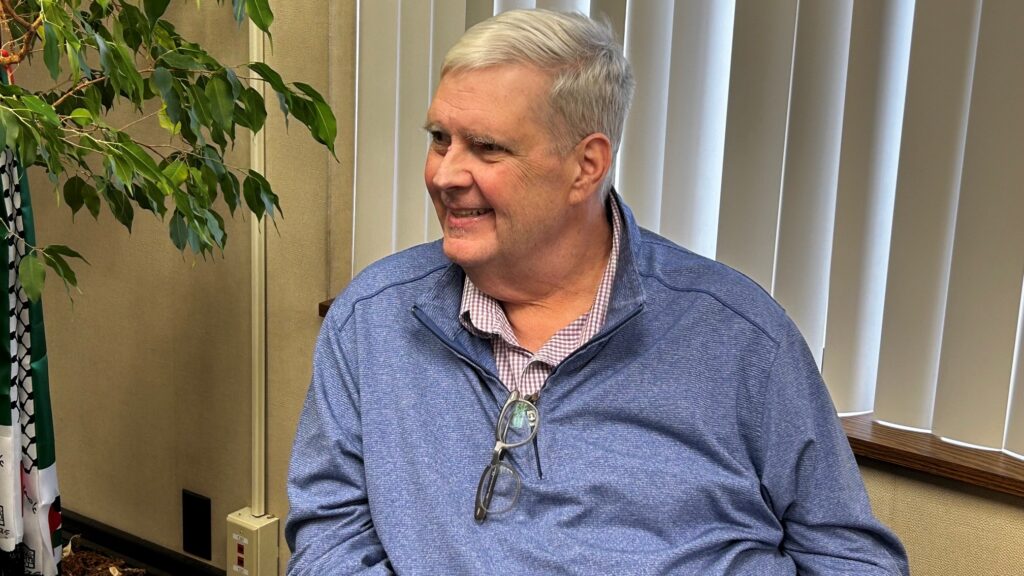
What surprised both leaders most was the resilience of the team. “They’re still here,” Mohamed said, laughing softly. “They stayed calm. They kept going.”
“They block out the noise,” Fech added. “A client needs housing. Someone needs help with an electric bill. They do what needs to be done.”
For more than 50 years, refugee resettlement has been a core part of the LSS mission. “It’s a pillar of who we are,” Fech said. “Welcoming neighbors, as LSS President and CEO Héctor Colón likes to say.”
Even as the program shrank, LSS continued planning for the future. “We know federal policies evolve over time,” Fech said. “This could change again. We have to be ready.”
Support doesn’t end after the initial resettlement window. “There are elders, people with disabilities,” Fech said. “LSS finds ways to continue supporting them with dignity and respect.”
One of the most persistent misunderstandings, both leaders said, centers on who refugees are.
“Refugee resettlement is a structured federal process,” Mohamed said. “Individuals complete extensive interviews, security screenings and medical clearances before approval. ”Refugees are protected under international law and selected by the United States based on vulnerability. “They come ready to work,” he said. “They pay taxes. They rent homes. They start businesses.”
Fech recalled a recent moment. “A family was excited because their daughters could finally get an education,” he said. “Things we take for granted, they came here for that.”
Mohamed added his own experience. “I came as a refugee at 17,” he said. “By age 19, I wasn’t receiving government benefits anymore. My wife works. I work. We pay into the system.”
Asked what gives him optimism, Fech pointed to history. “They didn’t shut it off completely,” he said. “And things change daily.”
Both leaders ended with the same request. “Be an ally,” Mohamed said. “Sometimes people are scared. They don’t know the language. They don’t know how to advocate for themselves.”
“Walk in their shoes,” Fech said. “They are your neighbors.”